
How Pharmaceutical Companies Can Avoid US Healthcare Tariffs
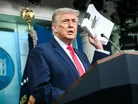
A wide range of agreements between the US Government and leading pharmaceutical manufacturers is set to reshape how Americans access and pay for prescription medicines.
Announced in late 2025, the deals focus on lowering drug costs while “preserving America’s cutting-edge biopharmaceutical innovation,” says AstraZeneca.
They also connect tariff relief to major investments in domestic manufacturing and research, aiming to expand access to life-changing treatments for chronic disease, cancer and obesity.

Lower costs aligned with wealthy nations
AstraZeneca confirmed that it has voluntarily met all four requests outlined in President Donald Trump’s 31 July letter, agreeing to measures that can equalise US medicine prices with those available in other wealthy countries.
The company will aim to provide direct-to-consumer sales for eligible patients with prescriptions for chronic diseases at discounts of up to 80% off list prices.
Pfizer is also attempting to ensuring Americans receive comparable drug prices to those available in other developed markets, with savings that could range as high as 85% and average around 50% across most of its primary care treatments and select specialty brands.
“Every year AstraZeneca treats millions of Americans living with cancer and chronic diseases and, as a result of today’s agreement, many patients will access life-changing medicines at lower prices,” says Pascal Soriot, Chief Executive Officer, AstraZeneca.
“This new approach also helps safeguard America’s pioneering role as a global powerhouse in innovation and developing the next generation of medicines.
“It is now essential that other wealthy countries step up their contribution to fund innovation.”
All sustainability, net zero and sustainable procurement leaders should attend:
- Procurement & Supply Chain LIVE: The Net Zero Summit - QEII Centre, London, March 4-5
- Procurement & Supply Chain LIVE: The US Summit - Navy Pier, Chicago, April 21-22
Co-located with Sustainability LIVE, these events brings together CPOs, CSCO, CSOs, ESG leaders and senior decision-makers at a moment when sustainability, supply chains and commercial performance are increasingly interconnected.
Tickets can be booked online today for The Net Zero Summit and The US Summit. Group discounts available.
Direct purchasing expansion
Central to the agreements is participation in the TrumpRx.gov direct purchasing platform, aiming to enable patients to buy medicines at significantly reduced cash prices directly from manufacturers.
AstraZeneca and Pfizer will both aim to offer discounted medicines through this system, providing clearer pricing frameworks and expanding patient access.
The Administration’s broader strategy is designed to reduce the burden on American families who have historically paid far higher prices for brand-name medicines than other financially developed countries, even after manufacturer discounts.
“We are proud to join President Trump at the White House to celebrate this landmark agreement that is a win for American patients, a win for American leadership and a win for Pfizer,” says Albert Bourla, Chairman and Chief Executive Officer of Pfizer.
“By working closely with the Administration, we are lowering costs for patients and enabling greater investment in the US biopharmaceutical ecosystem by ending the days when American families alone carried the global burden of paying for innovation.
“This is about putting all patients first and ensuring America remains the world’s leading engine of medical breakthroughs.”
Obesity and chronic disease access
Eli Lilly’s agreement focuses heavily on obesity, a condition affecting an estimated 40% of American adults and driving more than 200 associated diseases including heart disease, strokes and certain cancers.
Starting as early as 1 April 2026, Medicare beneficiaries is set to pay no more than US$50 per month for Zepbound and for orforglipron, provided both receive FDA approval.
Self-pay patients can also gain access through LillyDirect, with Zepbound priced from US$299 up to US$449 depending on dosage, while orforglipron could start at US$149 per month.
"Today marks a pivotal moment in U.S. health care policy and a defining milestone for Lilly, made possible through collaboration with the Trump Administration,” says David A Ricks, Eli Lilly Chair and CEO.
“As we expand access to obesity treatments for more Americans and advance one of the most innovative obesity pipelines, we remain focused on improving outcomes, strengthening the US healthcare system and contributing to the health of our nation for generations to come.
TrumpRx pricing reductions could also lower Ozempic and Wegovy from USUS$1,000 and US$1,350 per month to US$350, while Zepbound and orforglipron is set to fall from US$1,086 to an average of US$346.
Tariff relief and manufacturing investment
The agreements could provide three-year delays on Section 232 tariffs, giving companies time to fully onshore medicines manufacturing so that products sold in America are made domestically.
“In case after case, our citizens pay massively higher prices than other nations pay for the same exact pill, from the same factory, effectively subsidising socialism abroad with skyrocketing prices at home,” says President Donald Trump.
“So we would spend tremendous amounts of money in order to provide inexpensive drugs to another country.
“And when I say the price is different, you can see some examples where the price is beyond anything, four times, five times different.”
AstraZeneca’s US$50bn investment over five years includes its largest ever manufacturing facility in Virginia supporting weight management, metabolic medicines and its antibody drug conjugate cancer pipeline.
The company is also opening an expanded site in Coppell, Texas next week, a cell therapy facility in Rockville, Maryland early next year and a second major R&D centre in Cambridge, Massachusetts in late 2026.
Pfizer has secured similar tariff certainty while committing an additional US$70bn to US research, development and capital projects, supported by a workforce of 31,000 colleagues across 13 manufacturing and distribution sites and seven major R&D facilities.
These agreements reflect the Administration’s push to end a system where Americans have carried what it describes as the global burden of funding pharmaceutical innovation.
Although the US holds less than 5% of the world’s population, roughly 75% of global pharmaceutical profits come from American taxpayers.
Manufacturers can now guarantee Most-Favored-Nation pricing on new medicines and expand Medicaid access nationwide.
Alongside reduced costs for patients, the policy aims to strengthen supply chains, increase domestic investment and preserve America’s role as the global hub for medical breakthroughs in areas such as oncology, obesity, vaccines and inflammation and immunology.
Company portals




Executives
Albert Bourla
Chief Executive Officer
Dave Ricks
Chair, CEO

Pascal Soriot
CEO