WHO Issues First Global Childhood Obesity Guidelines
In 2025, the number of children and adolescents suffering from obesity surpassed the number of underweight children globally for the first time.
Obesity prevalence for children aged 5-19 years has quadrupled since 1990 – rising from 2% to 8%.
Amid increasing rates of obesity among younger people globally, the World Health Organisation (WHO) has published its first guidelines on the global childhood obesity epidemic.
Chief among its recommendations is to prioritise lifestyle changes, such as diet, counselling, digital health solutions and exercise, over medical interventions, such as GLP-1 drugs, bariatric surgery, or weight-loss drugs.
Echoing this approach, Dr Luz María De Regil, Director of the Department of Nutrition and Food Safety at WHO, explains: “The foundation of obesity care for children and adolescents is not medicine or surgery, but access to comprehensive support that enables healthy eating, physical activity and sustainable behaviour change.
“Our priority must be to ensure that every child and adolescent can access quality care and supportive environments from an early age, helping them achieve and maintain a healthy weight and laying the foundation for lifelong health and wellbeing.”
“The foundation of obesity care for children and adolescents is not medicine or surgery, but access to comprehensive support. ”
Obesity management goes beyond weight loss
The guidelines also highlight the need to address mental health alongside obesity, recognising that anxiety, depression, low self-esteem and emotional dysregulation can contribute to unhealthy eating habits, physical inactivity and social withdrawal.
Children and adolescents living with obesity may also face stigma and bullying, further affecting their emotional well-being.
WHO recommends that healthcare professionals identify and address obesity and co-existing mental health conditions early, using inclusive, age-appropriate approaches that involve families.
Beyond weight management, the guidelines call for care that prioritises overall health, daily functioning and well-being. Treatment should be tailored to each child’s developmental stage and individual and family needs, with long-term follow-up and continuity of care.
- 4x increase – Obesity prevalence among 5–19-year-olds has quadrupled since 1990.
- 8% – Global obesity prevalence among children and adolescents aged 5–19, up from 2% in 1990.
- 2025 milestone – Children and adolescents living with obesity outnumbered those who were underweight globally for the first time.
- 34 countries – Initially supported by the WHO–UNICEF operational model to accelerate national obesity responses.
- 2030 target horizon – WHO’s Acceleration Plan to Stop Obesity aims to accelerate country-level action through 2030.
However, clinical interventions alone will not reverse rising obesity rates. WHO is also calling for broader policy action to make healthy diets and physical activity more accessible and affordable, including regulatory and fiscal measures and coordinated efforts across education, urban planning, transport and social protection.
The guidelines say that medications or bariatric surgery should be strictly reserved as a last resort for adolescents aged 10 and older and only after supervised lifestyle interventions have proven unsuccessful.
Wider obesity plan
WHO’s childhood obesity guidelines form part of its wider response to the global obesity epidemic.
At the 75th World Health Assembly in 2022, member states adopted a range of recommendations for preventing and managing obesity, forming the WHO Acceleration Plan to Stop Obesity.
The plan aims to accelerate country-level action through 2030, supporting governments to introduce evidence-based policies, strengthen obesity prevention and management services and monitor progress toward global targets.
Its priorities include measures to improve diets and physical activity, restrict the marketing of unhealthy foods and drinks to children, and expand access to obesity prevention and treatment through healthcare services.
WHO also emphasises the importance of country-specific roadmaps, political commitment and collaboration between governments, healthcare systems and other partners.
By 2035, the global economic impact of obesity is expected to surpass US$4tn annually, according to WHO.
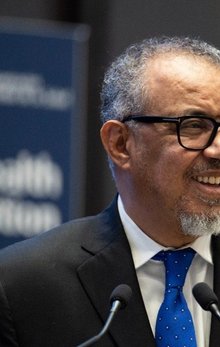
Dr Tedros Adhanom Ghebreyesus, WHO Director-General, has said that “obesity-related diseases drain scarce resources from health systems and negatively impact economies.”
In April 2026, WHO and UNICEF published an operational model to help countries translate the plan into action, setting out a phased approach spanning the selection of priority interventions, implementation planning, delivery and the monitoring and scaling of effective measures. The model initially supports 34 countries in accelerating their responses to obesity.
“Obesity-related diseases drain scarce resources from health systems and negatively impact economies. ”
Change at the top of WHO
The guidelines come as WHO prepares for a change in leadership, with potential implications for the organisation’s future priorities.
Current Director-General Dr Tedros Adhanom Ghebreyesus is due to complete his five-year term in August 2027.

The election process began in April 2026, when member states were invited to submit nominations for the role. In January 2027, WHO’s Executive Board is expected to shortlist candidates and nominate up to three for consideration by the World Health Assembly, where member states will elect the next Director-General in May 2027. The formal transition is scheduled for August 2027.
WHO has also made changes to its leadership and advisory structures, appointing Dr Vanessa Kerry as the Director-General’s Special Envoy for Health Resilience in September 2026.
As the organisation approaches this transition, its leadership and strategic direction will remain important considerations for global health policy, including the international response to childhood obesity.
WHO - key partners
UNICEF
Leader: Catherine Russell, Executive Director | HQ: New York
UNICEF works with WHO to improve child health, nutrition and well-being worldwide. The organisations have a long-standing collaboration spanning maternal and child nutrition, mental health, health systems and public health emergencies. UNICEF also supports governments in delivering health services and protecting vulnerable children, making it a key partner in efforts to prevent childhood obesity.
World Bank Group
Leader: Ajay Banga, President | HQ: Washington, DC
The World Bank Group supports countries through development financing, technical expertise and policy advice. It works with WHO on global health initiatives, including efforts to strengthen health systems and expand access to healthcare. Its role in financing development programmes can help governments address wider determinants of health, including poverty, food security and access to essential services.
Company portals
Executives
Luz Maria De Regil
Director, Nutrition & Food Safety
Tedros Adhanom Ghebreyesus
Director General