Novo, Hengrui Agree US$2.6bn Deal For Weekly GLP-1/GIP Pill
As the race to lead the GLP-1 market with Eli Lilly intensifies, Novo is expanding its pipeline with a multi-billion-dollar licensing deal with Chinese pharmaceutical leader Hengrui Pharmaceuticals.
The exclusive agreement includes $US300m upfront, alongside US$2.3bn in commercial, regulatory and development-related milestone payments.
Under the agreement, Novo gains exclusive rights to develop and commercialise HRS-1596, a phase-1-ready once-weekly oral GLP-1/GIP treatment, outside mainland China, Hong Kong, Macao and Taiwan.
Hengrui Pharmaceuticals is China’s largest pharmaceutical company by market value. Its research strategy spans oncology, cardiovascular and metabolic diseases, and immunology.
The company is also increasingly licensing its drug candidates to Western pharmaceutical partners as it expands its global footprint, with previous agreements involving GSK and Bristol Myers Squibb.
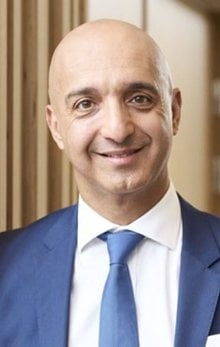
Commenting on the agreement, Novo CEO Maziar Mike Doustdar says: “The possibility of a once-weekly oral treatment speaks to an important ambition: making care more convenient for people living with obesity, type 2 diabetes and other metabolic diseases.
“By bringing together our own research with promising external innovation, we’re strengthening our oral pipeline and working together to advance more options to help people pursue lasting health.”
- US$2.6bn – Total potential value of Novo’s deal with Hengrui.
- US$300m – Upfront payment to Hengrui under the licensing agreement.
- US$2.3bn – Potential commercial, regulatory and development milestones.
- ~250 – GLP-1 drug candidates currently in development across China.
- 177 – Drug candidates in Hengrui’s R&D pipeline, according to Citeline’s 2026 Pharma R&D Annual Review.
Convenience is king?
The Novo-Hengrui deal is another indication that the GLP-1 market is moving towards a new generation of treatments in which oral medicines will likely play a much greater role alongside the injectable therapies that have so far dominated obesity and diabetes care.
As the market expands, convenience is becoming an increasingly important consideration for patients, drugmakers and investors.
HRS-1596 potentially addresses two of the biggest limitations of existing GLP-1 treatments: the need for frequent dosing and the use of injections. If successful, a once-weekly pill could offer a simpler alternative to daily oral treatments or regular injectable medicines.
Martin Holst Lange, EVP of Research and Development and Chief Scientific Officer at Novo, says: “With potential for once-weekly oral dosing, this investigational medicine represents another opportunity to explore more convenient treatment options for people living with diabetes, obesity and related conditions.”
The agreement follows a series of deals by Novo aimed at strengthening its next-generation obesity and oral GLP-1 pipeline.
“This investigational medicine represents another opportunity to explore more convenient treatment options for people living with diabetes, obesity and related conditions. ”
In September 2026, the company agreed to acquire three experimental obesity drug programmes from US biotech Kallyope. The candidates target biological pathways beyond the GLP-1 mechanism, potentially giving Novo additional approaches to treating obesity as the market develops beyond first-generation therapies.
In the same month, Novo partnered with biotech Orbis Medicines on oral macrocyclic peptides, an emerging class of molecules that could help overcome some of the challenges associated with delivering peptide medicines in tablet form.
China’s growing GLP-1 position
The Hengrui deal also highlights the increasingly important role Chinese pharmaceutical companies are playing in the global GLP-1 race.
According to China-focused life sciences intelligence firm Pharmacube, nearly 250 GLP-1 drug candidates are under development across China, creating a substantial pool of potential assets for both domestic and international drugmakers.
Major pharmaceutical companies including AstraZeneca, Pfizer and Merck & Co have recently struck deals with Chinese developers working in the GLP-1 and obesity space, reflecting growing interest in China as a source of drug innovation as well as manufacturing capacity.

For Hengrui, the Novo agreement provides another route for bringing its drug-development capabilities to international markets through a global pharmaceutical partner.
The company has one of the industry’s largest R&D pipelines. According to Citeline’s 2026 Pharma R&D Annual Review published in April 2026, Hengrui had 177 drug candidates in development, highlighting the scale of its research operation and the potential for further international licensing opportunities.
For Novo, meanwhile, HRS-1596 adds another potential weapon to its efforts to compete in an increasingly crowded GLP-1 market – one where the next major battleground could be not only how effectively treatments drive weight loss, but how conveniently patients can take them.
Novo - key partners
Kallyope
CEO: Jay Galeota | HQ: New York City, US.
Kallyope is a New York-based biotechnology company developing medicines targeting biological pathways linked to obesity and other diseases. In September 2026, Novo acquired three early-stage obesity programmes from Kallyope, including a potential first-in-class peptide and two small-molecule programmes. The assets use non-incretin mechanisms, potentially complementing Novo’s existing GLP-1 treatments and broadening its obesity pipeline.
Orbis Medicines
CEO: Morten Graugaard | HQ: Copenhagen, Denmark
Orbis Medicines is a biotechnology company developing orally bioavailable macrocycle medicines using an AI-enabled drug discovery platform. Its 2026 partnership with Novo, worth up to US$1.4bn, aims to develop next-generation oral treatments for cardiometabolic diseases. Orbis’ technology combines generative AI, automated chemistry and high-throughput screening to identify macrocycles designed to overcome challenges associated with oral delivery.
Company portals

Executives
Martin Holst Lange
Executive Vice President of R&D & Chief Scientific Officer
Maziar Mike Doustdar
President and CEO