Boehringer, Microsoft, NVIDIA, GSK: This Week in Healthcare

German pharmaceutical giant Boehringer Ingelheim has set its sights on becoming a frontier AI company across human pharmaceuticals and animal health, placing AI and advanced computational techniques at the heart of its future strategy.
Building partnerships with leading AI companies is central to achieving this ambition, bringing together pharmaceutical expertise and advanced technology to explore novel approaches to healthcare and drug development.
Microsoft is among its latest collaborators. Announced during the Microsoft Frontier Tour in Cologne, Germany, the partnership will explore how digital patient twins could transform clinical development, potentially improving trial design and accelerating the generation of evidence for new medicines.
Shashank Desphande, Chairman of the Board of Managing Directors and Head of Human Pharma at Boehringer, sees partnerships between innovative technology and pharmaceutical firms as essential to unlocking AI’s potential in healthcare.
Shashank met Microsoft CEO Satya Nadella at the event in Germany, and in a LinkedIn post following the meeting, Shashank writes: “One thing is becoming increasingly clear: realising AI’s full potential in healthcare will require more than technology alone. The most impactful innovations rarely emerge in isolation. They happen when different expertise, perspectives and capabilities come together - around a shared ambition.”
GTC Berlin, NVIDIA’s flagship European conference, brings together technology leaders, researchers and industry executives to explore the latest advances in AI, robotics and accelerated computing.
This year, healthcare and life sciences are among the sectors in focus, with NVIDIA announcing a series of collaborations spanning precision cancer care, protein design and AI-powered drug discovery.
The announcements reflect the growing role of agentic AI in scientific research and clinical workflows, alongside physical AI that connects intelligent software with real-world systems.
“Agentic and physical AI are opening new possibilities across medicine, from designing proteins and powering autonomous laboratories to improving personalised cancer care,” says Kimberly Powell, Vice President of Healthcare at NVIDIA.
“Together with healthcare and life science leaders, we’re accelerating scientific discovery and advancing more precise, accessible care around the world.”

GSK’s oncology division is riding strong tailwinds after publishing a series of impressive clinical trial results throughout October 2026.
In the build-up to the ESMO 2026 (European Society of Medical Oncology) conference in Madrid, Spain, the British pharmaceutical giant revealed it would present more than 20 data abstracts from its solid tumour portfolio – up from 11 at ESMO 2025.
Chief among these were positive, late-stage clinical trial results for Mo-Rez for platinum-resistant ovarian cancer, Jemperli for advanced rectal cancer and Ris-Rez for bone cancer.
Hesham Abdullah, Global Head of Oncology, Research & Development at GSK, believes cancer care is entering its next stage of development, driven by treatments such as those being investigated in GSK’s clinical oncology pipeline.
“Advances in cancer biology, technology and drug development are creating opportunities that simply weren't possible a decade ago,” he says in a LinkedIn post discussing the company’s oncological progress.
“The challenge now is translating those advances into medicines that can potentially improve outcomes for the patients who need them most.”

A decade after the Paris Agreement set the ambition of limiting global warming to 1.5°C above pre-industrial levels, the Lancet warns that the health impacts of climate change are accelerating faster than the global response.
Against this backdrop, the Lancet Countdown Report calls for climate change to be recognised as a public health emergency, requiring a globally coordinated, long-term response.
Produced by an international collaboration of 146 researchers and more than 100 institutions, led by University College London (UCL) and developed in strategic collaboration with the World Health Organisation (WHO), the report tracks global trends across 54 indicators related to climate change and health.
The Lancet Countdown’s annual assessment examines the health impacts of climate change alongside the potential benefits of interventions designed to address it.
Chief among the report’s concerns is the growing toll of extreme heat. Between 2016 and 2023, heat was associated with an average of 540,800 deaths annually, with climate change responsible for 68% of these deaths, up from 55% between 2006 and 2015.
In 2023 alone, heat-related deaths reached a record 710,000, exceeding the annual death toll attributed to malaria or HIV, according to the report.
French pharmaceutical giant Sanofi has demonstrated its continued commitment to European pharmaceutical manufacturing amid fears that the continent is struggling to compete with rival markets.
The company has broken ground on a new insulin manufacturing facility at its BioCampus in Frankfurt, Germany, in a major investment aimed at strengthening its production capabilities and supply chain resilience.
According to Sanofi, the facility will “bring a new generation of insulin production” to one of the company’s largest integrated research and manufacturing sites, helping meet the needs of millions of people living with diabetes worldwide.
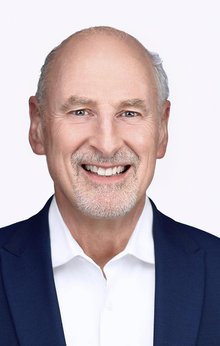
Brendan O’Callaghan, Head of Manufacturing and Supply at Sanofi, says the investment builds on the company’s longstanding expertise in insulin production while bringing new technologies to the site.
“With this investment, we are building on more than 100 years of experience in insulin manufacturing at the site, to bring the latest innovations in Biopharma manufacturing to help us further advance the supply of Insulins for the increasing number of patients living with Diabetes, in Europe and around the world,” he writes on LinkedIn.
Company portals






Executives
Brendan O'Callaghan
Executive Vice President, Manufacturing and Supply
Hesham A. Abdullah, MD, MSc
Senior Vice President, Global Head of Oncology, Research & Development
Kimberly Powell
Vice President / General Manager, Healthcare at NVIDIA
Shashank Deshpande
Chairman of the Board of Managing Directors & Head of Human Pharma