
Roche, AbbVie, Merck Group: This Week in Healthcare

AI-designed therapeutics are a big deal in pharmaceutical investment circles, with Basecamp Research’s oversubscribed US$140m Series C financing round offering another clear indication of the momentum building in the space.
Venture capital firm S32 led the investment, with backing from major technology and pharmaceutical firms, including NVIDIA.
Further participants in the funding round include: Catalio Capital Management, European Tech Collective, Firebrand River Capital, ATO Innovation Fund, Redalpine, The Rockefeller Foundation, Singular and True Ventures.
Sovereign AI, the UK's state-backed, AI-focused venture capital fund launched in April 2026, was also involved.
Highlighting the widespread interest in the firm, additional investment also came from senior leaders from across pharma, biotech and global industry, including André Hoffmann, Vice-Chairman of Roche, who says: "The biotechnology revolution that began fifty years ago transformed how we make medicines. Personalised, AI-designed therapeutics represent the next transformation of that journey.
“Basecamp Research has built the full platform to deliver it, from biological data to trained models to designed therapies. This will be key in helping the industry to continue to innovate."
Significant investment in US manufacturing and R&D has become a cornerstone of Roche and its US subsidiary Genentech’s strategy following Roche's pledge to invest US$50bn in US manufacturing and R&D over the next five years in April 2025.
The latest example of this strategy in action is the opening of the Roche Genentech Innovation Centre Boston, a research hub focused on cardiovascular, renal and metabolic (CVRM) diseases.
Located at Harvard’s Enterprise Research Campus in Allston, the centre will expand Roche and Genentech’s presence in the Boston life sciences ecosystem. The companies have signed a 10-year lease for the 95,000-square-foot facility, which has capacity for up to 500 people across research, clinical development, data science and other areas.
Manu Chakravarthy, SVP and Global Head of CVRM Product Development at Roche, believes the location will help connect the company with the region’s scientific community.
Following the grand opening on 17 September 2026, Manu writes on LinkedIn: “Bringing together world-class scientists, academic leaders, clinicians and policymakers for a day of dialogue about the future of medicine reinforced a fundamental truth: solving the complex challenges of cardiovascular, renal and metabolic disease is not something any of us can do alone.
“Putting our roots down here in Allston within the vibrant Boston life sciences ecosystem reflects our long-term commitment to this scientific community and to the millions of patients worldwide counting on us to deliver breakthrough medicines.”
AI drug discovery is one of the most talked-about technological developments in the pharmaceutical sector, with the industry’s largest players partnering with both up-and-coming biotech startups and established tech firms as they seek to expedite the identification and design of future medicines.
In the latest example of this trend, AbbVie has partnered with Iambic, a biotech backed by Nvidia and Qatar’s sovereign wealth fund, on a multi-year collaboration to accelerate small-molecule drug discovery and development.
The partnership will focus on programmes across immunology, neuroscience and oncology, with the companies targeting potential first-in-class and best-in-class medicines.
Iambic also announced that it will file for a US IPO and plans to use the funds raised to progress three oncology drugs in the early stage of development.
Following the announcement, Iambic CEO and Co-Founder Thomas Miller writes on LinkedIn: “At Iambic, our mission is to make better technology for better medicines – in our own hands and with partners. That’s why we are incredibly proud to announce a new, multi-year collaboration with global pharmaceutical leader AbbVie.
“Together we will apply Iambic’s molecular superintelligence platform toward the discovery of small-molecule programmes with first-in-class and best-in-class potential across therapeutic areas of immunology, neuroscience and oncology.”
Merck Group has been recognised at the Global Sustainability Awards 2026, taking home the Transformation Project of the Year award for its work developing bio-based solvents for analytical applications.
The award recognises Merck Group’s’s efforts to reduce the environmental impact of laboratory testing by developing less carbon-intensive alternatives to conventional, fossil-derived solvents used across life sciences.
Laboratory consumables are an often-overlooked contributor to the environmental footprint of pharmaceutical research, diagnostics and other healthcare-related scientific activity.
Merck Group’s project demonstrates how changes to essential laboratory materials can support decarbonisation while maintaining the performance standards required for highly controlled analytical environment.
The chairs of nine leading European pharmaceutical companies have jointly called for action to strengthen Europe’s pharmaceutical sector in an open letter to European political leaders, as competing markets – particularly the US and China – ramp up investment and clinical trial activity.
Their intervention comes as the global centre of gravity for pharmaceutical research and development shifts away from Europe.
The continent accounted for 43% of global pharmaceutical R&D in 1990, but that share has now fallen to 31% and is continuing to drop, according to figures cited by the companies.
Clinical research is following a similar trajectory. The chairs say Europe’s share of commercial clinical trials has halved over the past decade to 9%, reducing opportunities for European patients to participate in trials while also limiting the investment and research activity that clinical studies bring to health systems.
For patients, the investment gap can also translate into slower access to innovation. The letter cites European Federation of Pharmaceutical Industries and Associations (EFPIA) data showing that around 40% of newly approved therapies never reach European patients, while those that do can take nearly 600 days to become available.






Executives
André Hoffmann
Co-Chairman
Manu Chakravarthy MD, PhD
SVP and Global Head of Cardiovascular, Renal and Metabolism Product Development, Roche-Genentech
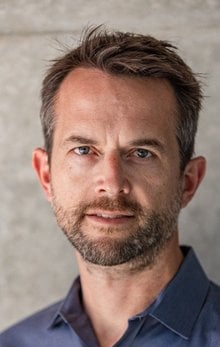
Thomas Miller
Co-founder and CEO