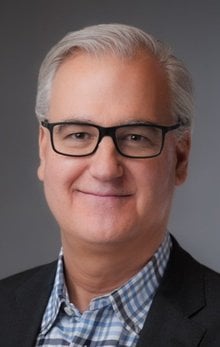
Bristol Myers Squibb Unites R&D Under Cristian Massacesi

Bristol Myers Squibb (BMS) is merging its R&D operations under a unified organisation, appointing current Chief Medical Officer and Head of Development Cristian Massacesi to lead the combined function from 1 January 2027.
The New Jersey-based pharmaceutical firm says the move aims to strengthen collaboration between its scientific and clinical teams, accelerate decision-making and improve execution across its drug development pipeline.
In tandem with Cristian’s new role, current Chief Research Officer Robert Plenge will depart the business.
Announcing the appointment, BMS Chair and CEO Christopher Boerner said the new structure would more closely connect scientific and clinical expertise, helping the company position itself for long-term growth.
"Bringing Research and Development together as one organisation is an important step in our work to position BMS for long-term growth," Christopher said.
He added that traditional boundaries between research and development were increasingly collapsing, creating opportunities to attract and retain talent, build capabilities and better integrate new technologies.
Reversing the post-Celgene structure
The move is a significant organisational change for BMS, reversing the R&D structure introduced following its US$74bn acquisition of Celgene in 2019, which is one of the largest pharmaceutical industry acquisitions ever.
Before the deal, Thomas Lynch oversaw R&D as the company's Chief Scientific Officer. Following the acquisition, however, BMS divided responsibilities between two senior executives, appointing Rupert Vessey to lead Research & Early Development and Samit Hirawat to oversee Global Drug Development.
- 1 January 2027 – Date Cristian takes leadership of BMS' newly unified R&D organisation.
- March 2027 – When Robert Plenge is expected to leave BMS, following an advisory period supporting the transition.
- US$74bn – Value of BMS' 2019 acquisition of Celgene, which preceded the separation of research and development leadership.
- 3,000+ – Employees in the global organisation Cristian led during his tenure at AstraZeneca.
- 150+ – Clinical studies advanced under Cristian's leadership at AstraZeneca, alongside multiple regulatory approvals.
The arrangement aimed to combine the expertise of both pharmaceutical companies, with Rupert responsible for discovery, early development and translational medicine, while Simat oversaw the progression of pipeline assets through clinical development and towards commercialisation.
The latest changes will bring these functions back together, creating an end-to-end organisation spanning scientific discovery through to clinical development.
For BMS, the intention is to establish closer links between the teams responsible for identifying promising scientific opportunities and those tasked with translating them into potential treatments.

Cristian Massacesi to lead integrated R&D
Cristian brings considerable experience in pharmaceutical research and clinical development to the position.
He joined BMS in August 2025 as Executive Vice President, Chief Medical Officer and Head of Development, taking responsibility for early- and late-stage product development across the company's therapeutic areas.
Before joining BMS, he held senior positions at AstraZeneca, including Chief Medical Officer and Oncology Chief Development Officer. During his time at the company, he led a global organisation of more than 3,000 employees, overseeing the advancement of more than 150 clinical studies and multiple regulatory approvals.
He has also held senior R&D positions at Pfizer and Novartis.
Reflecting on his appointment in a LinkedIn post, Cristian says he believes bringing research and development together will help the company deliver better outcomes from an operational and care perspective.
"When discovery and clinical development work as one, we make better decisions, move faster and ultimately serve patients better," he writes.
He also thanked colleagues across BMS' R&D organisation, highlighting the scientific rigour and patient focus underpinning their work.
"We have a strong pipeline, great science, and a team that knows how to execute," Cristian adds. "I look forward to working together on what is ahead."
“When discovery and clinical development work as one, we make better decisions, move faster and ultimately serve patients better. ”
Robert Plenge departs
The restructure will also mark the departure of Robert Plenge, who is currently BMS' Chief Research Officer.
Robert will remain with the company in an advisory capacity until March 2027, supporting the transition before leaving the pharmaceutical group.
He joined BMS through the Celgene acquisition and has played a significant role in developing its research capabilities. Both he and Cristian were involved in developing the new organisational structure.
On his time at BMS, Robert says: “I am incredibly proud of what we accomplished together in Research at Bristol Myers Squibb. It has been an honor to work alongside such exceptional scientists in advancing our mission.
“Cristian and I developed this new R&D structure in partnership, and I’m confident it is the right path forward for BMS and, most importantly, our patients.”
BMS – key partners
- BioNTech – BMS and BioNTech entered a global partnership in June 2025 to co-develop and commercialise BNT327, an investigational bispecific antibody targeting PD-L1 and VEGF-A. The collaboration combines both companies' expertise and resources, with a 50:50 profit-and-loss split, to advance the candidate across multiple solid tumour types.
- Hengrui Pharma – In May 2026, BMS and Hengrui announced strategic agreements covering 13 programmes across oncology, haematology and immunology. The collaboration combines Hengrui's discovery platforms and early-stage development capabilities with BMS' global clinical development and commercial expertise to advance potential medicines.
- Anthropic – BMS announced a strategic agreement with Anthropic in May 2026 to deploy Claude across its global operations, including research, clinical development and manufacturing. The initiative aims to embed AI agents into scientific and operational workflows, helping researchers analyse proprietary data, accelerate drug development and connect knowledge across the business.
Company portals

Executives
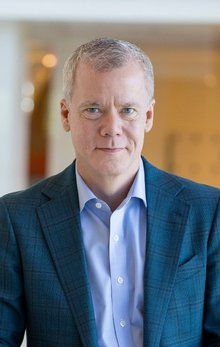
Christopher Boerner, Ph.D.
CEO
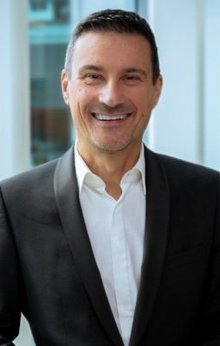
Cristian Massacesi, M.D.
Executive Vice President, Chief Medical Officer and Head of Development
Robert Plenge
Executive Vice President, Chief Research Officer, Head of Research