Haleon, SAP, BMS: This Week’s Top Healthcare Stories

Dengue is one of the world’s most pressing public health challenges. According to the World Health Organisation (WHO), around half of the global population is now at risk, with an estimated 100-400 million infections occurring each year.
Spread through the bites of infected mosquitoes, dengue outbreaks are particularly prevalent in tropical and subtropical climates. However, changing weather patterns, rising temperatures and shifting rainfall are contributing to the expanding geographical distribution of the disease.
2027’s expected El Niño could add further fuel to dengue’s global spread.
In response to this growing threat, consumer health company Haleon has launched an AI-powered predictive tool designed to forecast potential dengue outbreaks up to six weeks in advance.
Known as Fever Forecaster, the platform combines multiple sources of information, including satellite imagery, weather patterns, epidemiological records and aggregated online search trends, to identify areas where dengue risk could be increasing.
Bristol Myers Squibb (BMS) is merging its R&D operations under a unified organisation, appointing current Chief Medical Officer and Head of Development Cristian Massacesi to lead the combined function from 1 January 2027.
The New Jersey-based pharmaceutical firm says the move aims to strengthen collaboration between its scientific and clinical teams, accelerate decision-making and improve execution across its drug development pipeline.
In tandem with Cristian’s new role, current Chief Research Officer Robert Plenge will depart the business.
Announcing the appointment, BMS Chair and CEO Christopher Boerner said the new structure would more closely connect scientific and clinical expertise, helping the company position itself for long-term growth.
"Bringing Research and Development together as one organisation is an important step in our work to position BMS for long-term growth," Christopher said.
He added that traditional boundaries between research and development were increasingly collapsing, creating opportunities to attract and retain talent, build capabilities and better integrate new technologies.

AstraZeneca is embarking on a major enterprise technology transformation with SAP, migrating its existing ERP landscape to SAP Cloud ERP Private through RISE with SAP as it looks to streamline operations, improve decision-making and accelerate AI adoption.
The full-estate migration signals an expansion of a relationship developed over more than 20 years, with AstraZeneca aiming to standardise its global enterprise technology landscape, harmonise data and establish a more agile, resilient digital foundation.
Forming part of AstraZeneca’s Axial Business Transformation Programme, it aims to migrate legacy SAP ERP Central Component environments towards a cloud-based platform.
For a global pharmaceutical business operating across the life sciences value chain from research and manufacturing to supply chains and commercial operations, connecting systems and standardising processes is central to improving efficiency and operational visibility.
AstraZeneca’s transformation aims to enable the company to act on insights faster and create greater value for both its business and patients.
“SAP has been a key part of how we run our operations for more than two decades,” says Chris Taylor, Chief Information Officer at AstraZeneca.
“This next chapter of our partnership is about much more than modernising technology. Through Axial, we are simplifying how AstraZeneca operates and creating the foundations to move faster and unlock greater value from AI. That matters because the faster we can turn insight into action, the faster we can create value for our company and for patients.”

GHO, a specialist investor in global healthcare, has joined the Clean Heat programme as its first private equity firm member.
The scheme, a joint initiative between supply chain intelligence network Secaro and global sustainability consultancy ERM, establishes a clear path away from fossil fuel heat for manufacturing sites.
That involves identifying low-carbon solutions and funding options and driving successful supply chain engagement.
Secaro provides the data, insights and supplier engagement platform for the programme, while ERM brings the technical consulting expertise.
Emily Prior, Chief Growth Officer at Secaro, says: "There is growing recognition across industries, but particularly in the pharmaceutical sector, that supply chain heat is the next big area we need to tackle to drive further supply chain decarbonisation; however, the question remains: how do we proceed?”
GE HealthCare has extended its clinical and research network to seven sites across North America, Europe and Asia in order to validate the Photonova Spectra, its next-generation photon-counting CT system.
After securing the requisite regulatory approvals, the programme is now moving into clinical use with Deep Silicon detector technology.
These multi-continent trials focus on key operational objectives for Healthcare Sustainability Directors and operational leads: reducing radiation dose, streamlining workflows into single scans, and improving diagnostic efficiency in high-volume care.
Photonova Spectra uses Deep Silicon detector technology to deliver ultra-high-definition spectral imaging in a single workflow.
By combining high spatial resolution with material and tissue characterisation, you can get quantitative data and spectral biomarkers from a single scan. That reduces the need for repeat scans, increases clinical throughput and reduces patient radiation dose in the more complex cases.
“Deep Silicon photon-counting CT has the potential to change not only what clinicians can see, but what they can understand from every scan – creating new possibilities for early detection, personalized care and diagnostic confidence,” says Chad Rowland, Executive Director for Global CT at GE HealthCare.







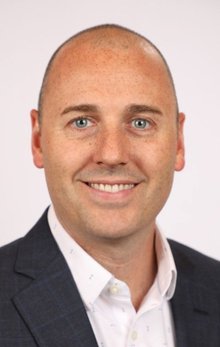
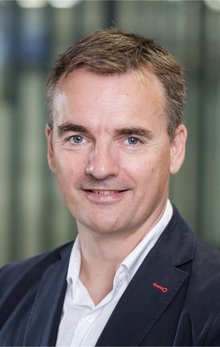
Executives
Chad Rowland
Executive Director, Global CT
Chris Taylor
Chief Information Officer

Cristian Massacesi, M.D.
Executive Vice President, Chief Medical Officer and Head of Development